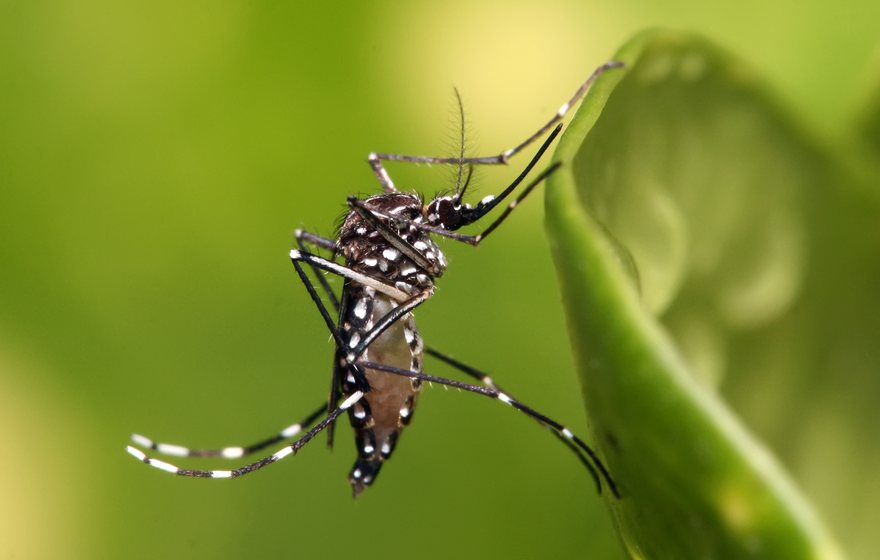
Michigan summers are short, and mosquitoes and ticks do their best to ruin them. East Lansing's humid summers, its wooded lots, and the low, damp areas along the Red Cedar River and neighborhood creeks give both plenty of places to breed and hide. Mosquito and tick control targets those spots, treating where the pests live and rest so your yard is usable again, and cutting the tick pressure that comes with wooded edges and tall grass.
Why East Lansing yards get hit
Mosquitoes need only a small amount of standing water to breed, and a typical yard offers more than you would think: clogged gutters, plant saucers, low spots that hold rain, tarps, and buckets. During the day the adults rest in shaded, humid harborage, under decks, in dense shrubs, in tall grass, and along wood lines. That is where treatment does the most good.
Ticks are the other summer problem, especially for homes near the Red Cedar corridor, wooded lots, and open space. They wait in tall grass and leaf litter along the edges of the yard, and Michigan has seen tick and Lyme pressure climb in recent years, which makes the wooded borders worth treating.
How the treatment works
Instead of fogging the open air, we treat the places mosquitoes actually rest and breed. Shaded harborage under decks and in dense plantings gets a targeted application, standing-water breeding sites are knocked down and pointed out so they can be removed, and the shrubs, tree lines, and yard edges where the adults shelter are covered.
For ticks, the focus is the perimeter: the tall grass, leaf litter, and wooded edges where they wait. Treating those borders and keeping them cut back cuts the number of ticks moving into the parts of the yard your family and pets use.
Timed for the Michigan season
Because the biting season here runs roughly from late spring through early fall, mosquito and tick control works best as a recurring treatment across those months rather than a single application. Each visit knocks down the current population and keeps the yard ahead of the next hatch, so the pressure stays low through the whole summer instead of rebounding a week later.
What you can do between visits
Treatment does the heavy lifting, but a few habits help it hold. Empty anything that collects water after rain, keep the gutters clear, cut the grass and trim back dense shrubs along the edges, and clear leaf litter where ticks wait. Those steps shrink the breeding and harborage the pests rely on, and the treatment handles the rest.